

Supplier ESG questionnaires in Ireland: a guide for SMEs
Receiving ESG questionnaires from customers? Discover what Irish SMEs need to report, how to respond and how the EU Voluntary Standard can help your business prepare.
Marketing team · 17 November 2026 · 5 min read
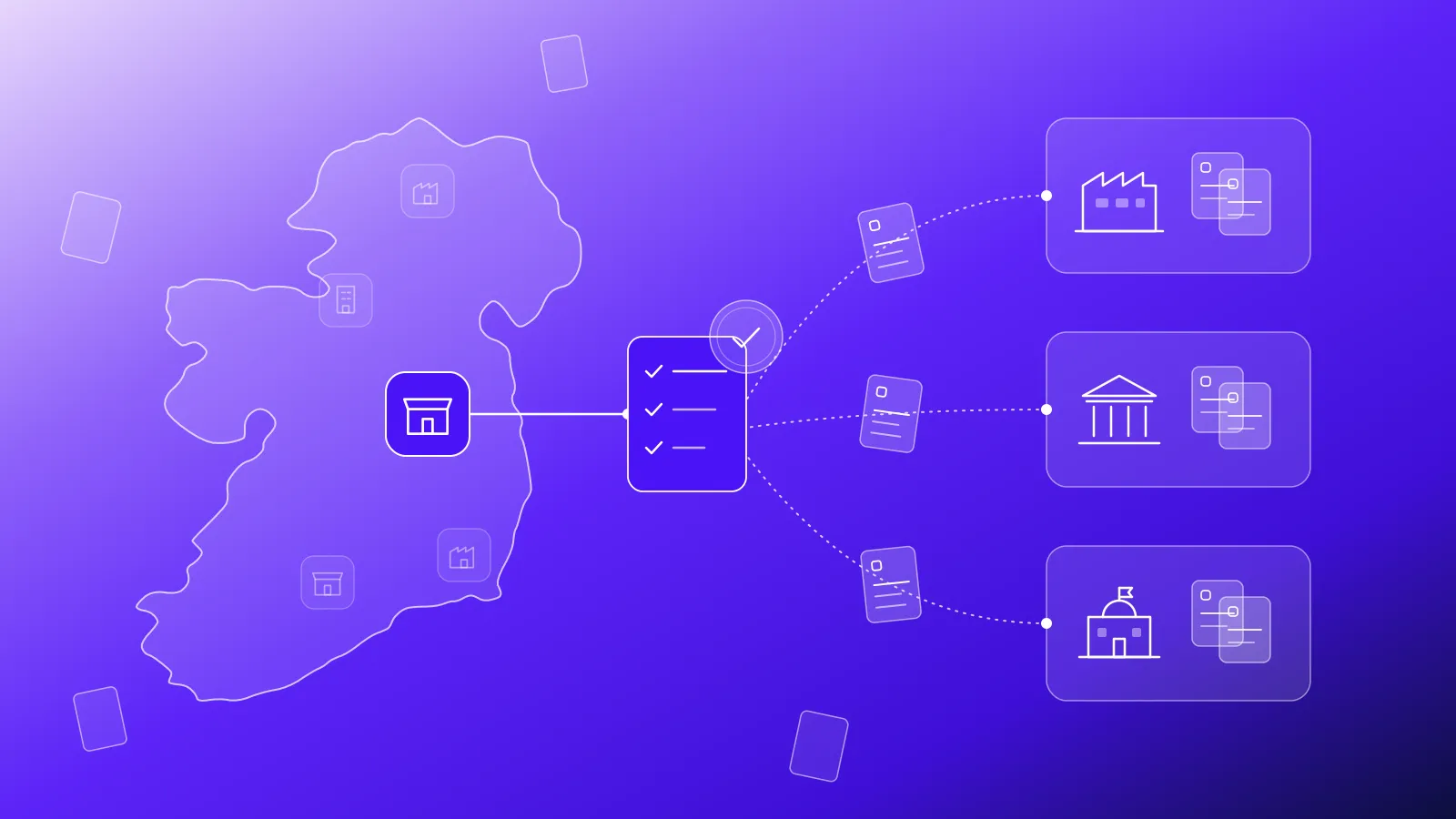
Supplier ESG questionnaires are requests from customers, banks and other business partners asking small and medium-sized enterprises (SMEs) to provide information about their environmental, social and governance (ESG) practices.
In Ireland, these requests are becoming increasingly common as larger companies collect sustainability information across their supply chains. Although most SMEs are not directly required to report under the Corporate Sustainability Reporting Directive (CSRD), they may still need to provide information about their emissions, energy use, workforce and environmental policies to maintain customer and supplier relationships.
The good news is that much of this information is probably already held within your business. The key is knowing what to collect, how to respond and how to prepare information that can be reused.
Why are customers asking Irish SMEs to complete ESG questionnaires?
Most requests come from three places:
- Large customers. Companies that report under the Corporate Sustainability Reporting Directive (CSRD), including multinationals with Irish operations, need information about their suppliers for their own reports.
- Banks and lenders. Financial institutions increasingly ask about emissions and climate risk, particularly for green or sustainability-linked loans.
- Public and private sector procurement. Since 2025, Irish public bodies must include green criteria in their procurement under the government's Buying Greener strategy. Private sector tenders increasingly score sustainability too.
Most Irish SMEs are outside the scope of CSRD themselves. However, if your customers are required to report, their sustainability information requirements can extend through their supply chains.
What do supplier ESG questionnaires typically ask for?
Questionnaires vary, but most ask for some version of the same core information:
Environmental information
- Energy consumption and the proportion from renewable sources
- Scope 1 and Scope 2 greenhouse gas emissions
- Business travel and other relevant emissions
- Water consumption, waste and recycling
- Use of materials and natural resources
Social information
- Number of employees and workforce composition
- Employee health, safety and wellbeing
- Employment policies, training and development
- Diversity, equality and inclusion
- Human rights and labour practices
Governance information
- Environmental and sustainability policies
- Business ethics and anti-corruption measures
- Data protection and responsible business practices
- Supplier standards and risk management
Some customers send questionnaires by email. Others use online platforms such as EcoVadis, CDP or Sedex, which have their own formats and, in some cases, an annual fee for suppliers. Our FAQs explain how these platforms differ from the VS. Either way, the underlying data is largely the same, so if you pull it together once, you can answer most requests.
How to answer a supplier ESG questionnaire: five steps
- Choose one person to coordinate. Often this is someone in finance or operations. It stops requests sitting with whoever happened to open the email.
- Find out who's asking, and why. Check whether the request is linked to the customer's CSRD report, a loan or a tender. That tells you how much detail they need.
- Gather your data once. Energy bills, fuel records, payroll and accident records cover much of what's asked.
- Prepare a report you can reuse. The Voluntary Standard (VS, formerly VSME) is the EU's framework for exactly this. Its Basic module covers the information most customers and banks need, so one report can answer many questionnaires.
- Keep a record. Save what you sent and when, so next year's answers take less time.
What if you don't have the data?
For an SME, this is understandable. Answer what you can, and be honest about the rest. If you don't measure something yet, say so, and say when you plan to start. An honest "not yet measured" is better than a guess, and most customers expect gaps from smaller suppliers, especially in the first year. What matters is showing you're taking it seriously.
Do you have to answer every question?
Not always. From financial years starting on or after 1 January 2027, companies reporting under CSRD can't require suppliers with 1,000 or fewer employees to provide more sustainability information than VS covers. This is known as the value-chain cap, and it starts alongside other CSRD dates for 2026 to 2029.
The cap doesn't apply yet, so customers may still request additional information in the meantime. Starting with the VS now will help you prepare, organise your sustainability data and respond more consistently to customer requests.
From 2027, if a customer makes a CSRD-related request that goes beyond the applicable cap, you could respond:
We report using the Voluntary Standard (VS). Our VS report covers the information required under the CSRD value-chain cap, and we're happy to share it with you.
For more on how the cap works, including whether it applies to banks and non-EU customers, see our supplier ESG questionnaire FAQs
Is there help available in Ireland?
Yes. Your Local Enterprise Office runs Green for Business, which helps small businesses take their first steps. Enterprise Ireland offers the Climate Action Voucher and GreenStart for funded expert advice, and SEAI offers vouchers towards energy audits, which can give you reliable energy data for questionnaires. Food and drink businesses can also join Bord Bia's Origin Green programme, which many Irish retailers and foodservice companies recognise.
Getting started
The first step is simply knowing what your customers are asking for, and why. You don't need a sustainability team to respond well. Start with the data you already hold, use our VS readiness checklist to see what's missing, and build from there.
While a questionnaire can feel like a burden, it’s also a sign that your customer sees you as a supplier worth keeping. Handled well, it shows them and your lenders that your business is reliable and well run.